
“Jin, Jiyan, Azadî.” “Woman, Life Freedom.” The chants can be heard through the streets of Iran, shouted by furious women hoisting signs and banners. The smell of burning hijabs fills the air, and the once-covered women have cut their hair and are protesting proudly in support of Masha Amini. Masha was a 22-year-old Kurdish woman who was so brutally attacked by the police that she fell into a coma and died. Her offense? Wearing her hijab “improperly.”

Photo: Markus Schreibe for the AP
Just a year earlier in France, another scene. A social media campaign #HandsOffMyHijab is going viral. Muslim women have been banned from wearing religious coverings in sports, such as the hijab or the even more modest burka. 16-year-old Mariem Chourak is furious. “It’s part of my identity. To force me to remove it would be a humiliation. I cannot understand why they would want to pass a law that discriminates.”

Woman playing basketball in France. Photo: Amnesty International
Iran and France may seem worlds apart, but they’re actually fighting the same battle. One side forces women to wear the hijab; the other bans them from wearing it. In both cases, the message is clear: women don’t get to choose. Whether enforced or outlawed, it’s about control. In Iran, they say the hijab is mandatory in the name of faith and morality. In France, it’s banned in the name of freedom and secularism. But both countries, despite their vastly different approaches, are rooted in the same patriarchal mindset: the idea that women’s choices aren’t their own to make. The protests are not for or against the hijab, but for the right to choose.
But what really is the hijab and why is it such a big deal?
Long before the hijab, veiling originated in ancient Mesopotamia among married women. In some ways, it was similar to the hijab, a marker of modesty. But it also carried an additional meaning as a symbol of honor and exclusivity. Slaves and prostitutes were expressly forbidden by the Code of Hammurabi from veiling their heads. The veil wasn’t just a symbol of modesty, It was also a mark of a woman’s social position, separating elite women from the lower classes.
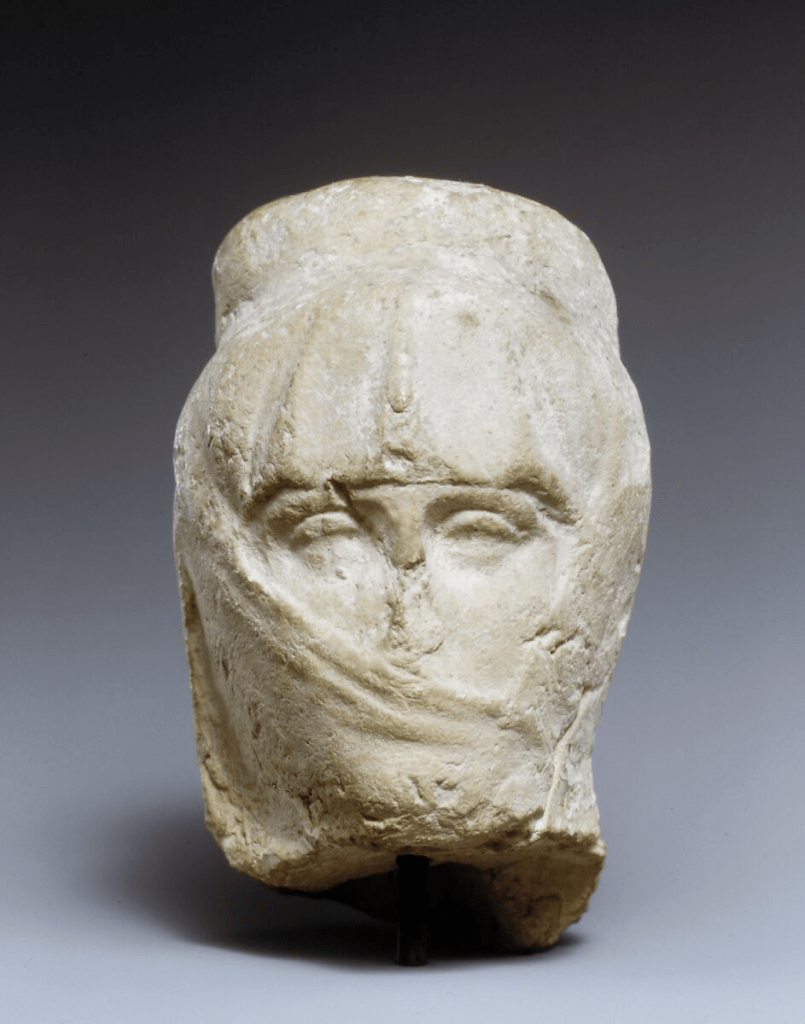
Terracota head of Greek woman wearing veil. Photo: Metropolitan Museum of Art
This practice of veiling for the elites was adopted by ancient Greeks. But it wasn’t until Roman times that all women began wearing the veil as a sign of dereference to their husbands. Women donned their veils for the first time on their wedding days to protect themselves from evil spirits. From then on, they always wore the veil in public.
All of this to say that the veil was a prominent practice long before the creation of Islam. In the Quran, the Prophet Muhammad encourages modesty for both muslim men and women, but veiling was never mandated by the laws of Mecca. While muslim women were required to wear the veil, women of other beliefs could dress differently.
It was only with the Iranian Revolution in 1979 that a government required all women, regardless of their belief, to veil in public. A garment that once distinguished muslim women was now required of all women. People no longer had the right to choose Islam. Instead, it was forced upon them in the form of the hijab mandate. And so began the debate over the right to choose…
Today, the hijab remains as much a reflection of culture as it is of religion. Its meaning varies widely depending on where people live, their personal tastes, and societal expectations. For some, it’s a deeply personal expression of faith; for others, it’s a connection to heritage and tradition. In the modern world, it intersects with fashion, becoming a way for women to express individuality and agency within their cultural and religious identities.

Photo Illustration: The Asian Australian Project
In Indonesia, for example, women wear a kerudung, which is a headscarf pinned neatly on both sides. On the other hand, Turkish women love to wear bold, satin hijabs with vibrant colors and unique prints. These are square and can be tied however the wearer likes. Hijabs have even blended into streetwear fashion and are styled with hoodies and sneakers in Western countries such as the United States or the UK.

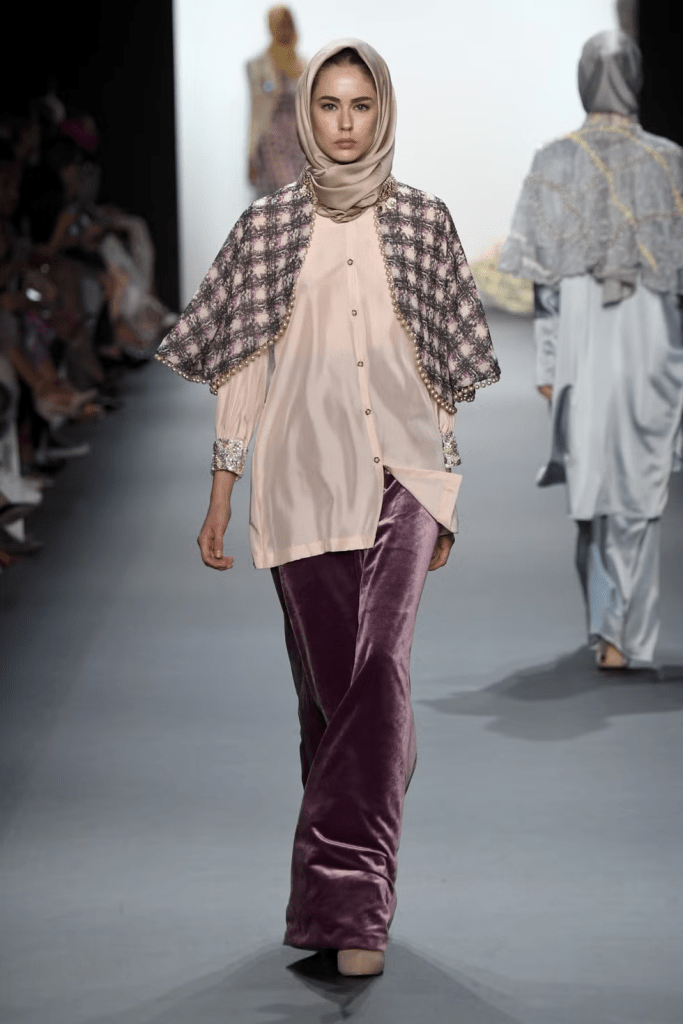
Photo Illustration: @mumzzz / Pinterest
Perhaps the most fabulous hijab appearance of the 21st century was Anniesa Hasibuan, whose designs made headlines for their stunning blend of tradition and high fashion. Picture sleek evening gowns in pastel shades, detailed with shimmering embroidery, seamlessly fitting with their paired hijabs. Her collection at New York Fashion Week marked the first time a designer sent models down the runway wearing hijabs with every outfit. It wasn’t just a statement but a celebration of modest fashion and a challenge to conventional beauty standards.

Photo: Getty Images
As a child, Anniesa grew up surrounded by the hijab in Indonesia. However as she grew her career in fashion, she realized the hijab could be more than a religious covering. It could be a symbol of self-expression. “The message for my collection is [to encourage] women to be strong and confident,” she said. “Though I might style the garments in a way that caters to my core customer of modest fashion followers…I hope that Muslim or not, [women] will find beauty in my work.” Through her designs, Anniesa challenged the stigma around modest dressing and increased hijabi representation


Photos: Getty Images
Her work carries an unspoken message: women should have the right to define themselves. Whether they choose to wear the hijab or not, it’s their decision.
Fashion has always been about resistance, a form of protest against conformism. In France, it’s a teenage girl demanding the right to wear her hijab to school. In Iran, it’s a woman tossing her headscarf into a fire and letting her hair fall free. In both places, the fight is not about what women wear but about who gets to decide. The hijab becomes a symbol of something larger: a right to self-expression, a stand against those who seek to control women’s bodies and lives. Whether stitched into Hasibuan’s dazzling designs or burned in the streets, it represents freedom—not of or from religion, but from oppression.
.
 The Fashion Clause
Leave a comment